
How to Create a Revision Timetable that Gets You Results

Updated: Jul 16
Quick Summary:
The LearnFire Revision Timetable Formula
Active over Passive: Prioritise high-energy active recall (timed past papers, concept mapping) over passive re-reading to boost memory retention.
The 25-Minute Rule: Use the Pomodoro Technique to reduce mental fatigue by up to 20% and maintain peak focus.
Strategic Flexibility: Structure your revision using exam specifications to target high-scoring topics, adapting daily to your energy levels.
In This Article:
Cramming and chaotic study schedules don't work. If you are struggling to stay on top of your revision, you shouldn't have to guess your way through it.
As Academic Director, I see students burn out every term trying to force progress through raw hours. The real fix is shifting from reactive panic to a structured daily plan.
This guide breaks down exactly how to build a functional revision timetable.
Use these steps to cover your material systematically and take the anxiety out of exam day.
1. Choosing an Analogue or Digital Revision Timetable
Your timetable must match your daily habits. Choose your platform based on how you naturally process tasks:
Paper Timetables:
Ideal if you benefit from tactile progress tracking. Physically crossing off completed tasks triggers a visual sense of accomplishment that maintains momentum.
Use paper if you prefer colour-coding by hand and need a physical layout sitting on your desk to stay accountable.
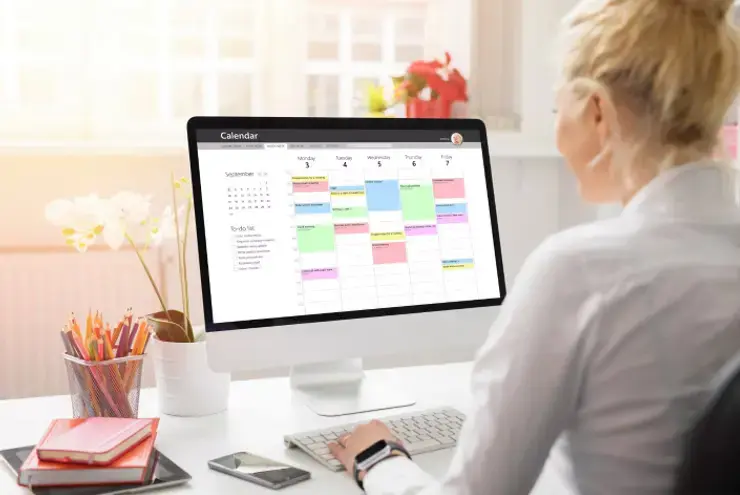
Digital Calendars (Google Calendar / Notion):
Best if you require flexibility. Digital setups allow you to drag and drop study blocks when your schedule shifts, set automated notifications, and sync your revision plan across your phone and laptop.
The best format for your timetable depends on your personal learning style. Choose the method that motivates you and fuels your focus.
2. Deconstruct Your Syllabus Into Micro-Topics
Do not schedule generic blocks like "Chemistry for two hours." Difficult subjects may take longer and lead to procrastination. Divide your exam topics into highly specific, bite-sized sub-topics and assign a distinct active-learning tool to each:
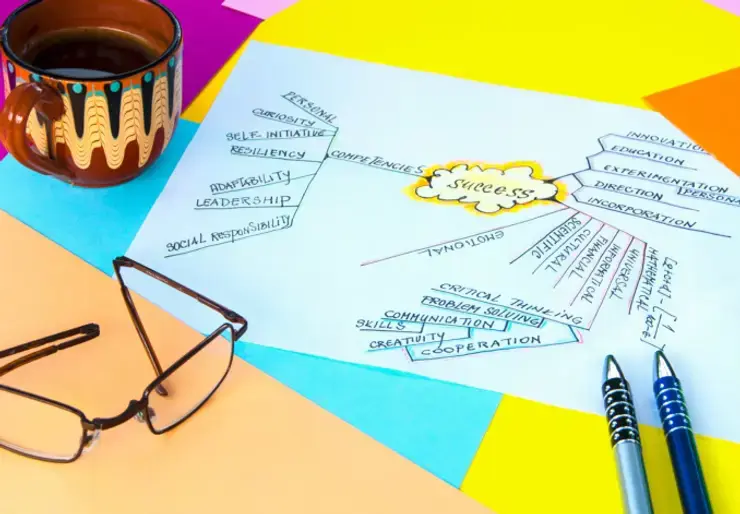
Concept Mapping:
Use this to map out connections across an entire syllabus module on a single page. It is highly effective for visualising how different ideas link together.
The Cornell Note-Taking System:
Condense dense textbook chapters. Divide your page to isolate core keywords and summaries, forcing your brain to process data rather than just copy it.
Flashcards with a Twist:
Do not just write definitions. Draw quick diagrams, trigger words, or mnemonics on your cards to build stronger paths to memory recall.
Flowcharts & Decision Trees:
Use these for process-heavy or chronological topics, such as scientific experiments, mathematical proofs, or historical timelines.
3. How to Strategise Like a Pro
Strategise like a pro by prioritising your weakest topics rather than spreading your energy evenly across everything.
Reviewing familiar material feels satisfying, but it does not improve your grades. Look at your official exam specifications and run your syllabus through a strict traffic-light audit:
Red: Topics you completely misunderstand or dread.
Amber: Topics you understand conceptually but struggle to answer correctly under exam conditions.
Green: Topics you have mastered and consistently score highly on.
Build your timetable around your Red and Amber areas first. Schedule your toughest Red topics during your peak mental alertness windows.
4. The Power of 25-Minute Study Sessions
There is power in 25-minute study sessions. Maintaining peak focus by breaking work into short, manageable bursts creates distraction-free study sessions.
Known as the Pomodoro Technique, this method pairs intense, distraction-free effort with regular, structured intervals of rest.
While it sounds simple, it is heavily backed by science. According to a large-scale scoping review published in BMC Medical Education, structured Pomodoro intervals were proven to reduce mental fatigue by approximately 20% and improve student focus and motivation compared to self-paced study schedules.
According to Frontiers in Psychology, spacing out your study chunks (distributed practice) rather than cramming is how the brain successfully locks knowledge into long-term memory.
5. Mix it Up: High, Medium, and Low Energy Activities
Mixing up High, medium and low energy activities keeps you engaged and improves memorisation. Alternate between high-energy activities like timed practice papers and low-energy ones like watching revision videos.
Pro Tip: "Flashcards, mind maps, and topic posters are your medium-energy allies. Feeling drained? Opt for low-energy activities like revision videos or online games."
6. Why Breaks Are Essential: Recharge, Refocus, Revise
Regular breaks allows you to recharge, refocus before you continue to revise. It is not a sign of laziness when you take planned days or regular breaks. They act as brain-boosting intervals, preventing burnout, enhancing focus, and solidifying memorisation.
Plus, they de-stress, spark creativity, and help you to view problems from a fresh perspective. So, schedule breaks, embrace them, and ace your exams!
7. The Three Phase Paper Strategy
The three-phase past paper strategy builds exam confidence by progressively moving from untimed, topic-specific questions to full, simulated mock exams.
Relying on your textbooks only creates a false sense of security. Integrate past exam papers into your timetable using a distinct, three-phase approach to get use to performing under timed exam pressure:
Phase 1: The Topical Phase (2–3 Months Out) Do not wait until you finish the syllabus to look at exam papers. After finishing a topic, immediately practise untimed, open-book questions on that specific unit. This cements your understanding immediately.
Phase 2: The Diagnostic Phase (1 Month Out) Begin sitting full, closed-book past papers. Do this to identify your weak spots under timed conditions. Use your performance here to adjust your timetable and target lingering problem areas.
Phase 3: The Simulation Phase (Final Weeks) Simulate exact exam conditions. Clear your desk, set a timer, and complete full papers without assistance. Afterwards, don't just check your score—spend at least 30 minutes reading the official examiner reports to understand exactly how marks are awarded or lost.
8. How to Make Your timetable stick
Build a flexible schedule that adapts to daily life so unexpected interruptions never derail your long-term exam preparation goals. A digital app, like Google Calendar, can be handy for quick edits. Remember, the best plan is one that adapts to your needs.
Expert advice: Plans change! Be flexible and ask yourself, 'What's the best use of my time right now?’

9. Why Short, Effective Revision Sessions Work
Focused revision beats long hours because short, targeted sessions maximise memory retention while marathon study blocks cause mental burnout.
Endless hours at your desk do not translate to better grades. Your brain has a hard limit on how much data it can process before it completely stops absorbing information.
Prioritise focus over duration. Shorter, focused study sessions with clear goals keep stimulates memorisation. Plan and pace your weekly revision so you do not burn out before your first exam.
10. Partner with an Academic Coach
An academic coach can guide you to plan your revision better, save time with time management skills and even help you to prepare for your exams. Our coaches have more than 10 years classroom experience and knows what examiners look for when they mark papers.
Ready to find your perfect tutor? Let LearnFire match you with the ideal expert to complement your revision plan and assist you with our in-depth study skills sessions to guide you to exam success.
"I will personally review all the information you have provided about your student, determine which teacher will be the best fit, and match them ."~ Chanté van Niekerk, Academic Director at LearnFire
Remember, you've got this! With these tips and a personalised learning plan, you'll feel confident about your preparation and approach your exams without feeling exam stress.
"Academic Coaching with LearnFire has been a turning point for our son in IGCSE Math and Science. The combination of expert teaching, encouragement, and structure has helped him approach both subjects with renewed independence and motivation in his studies." Rabia L. IGCSE Math and Science Parent, TrustPilot, 2025
Frequently Asked Questions
How far in advance should I start using past papers?
Incorporate past papers at least one month before exams to familiarise yourself with the format. You can change your schedule to full, timed exam simulations in the final week.
Is a digital or paper revision timetable better?
Digital timetables (like Google Calendar) offer maximum flexibility for scheduling changes. Paper timetables suit students motivated by the tactile reward of physically crossing off tasks.
What is the most effective revision technique for high grades?
The most effective technique is active recall combined with spaced repetition: testing yourself with flashcards, teaching topics aloud, and mapping concepts from memory.
How many hours a day should a student revise?
Aim for 3 to 5 hours of focused study per day during peak revision seasons, broken into 25-minute Pomodoro blocks with regular rest periods.
Unsure which exam board timetable to follow? We're here to guide you! Let us help navigate your exam requirements.

About Chanté van Niekerk
Chanté is the Academic Director at LearnFire. With a background in medical science, she deconstructs complex curricula to identify the specific cognitive blocks holding students back. Chanté personally oversees the diagnostic process to match globally mobile families with career teachers who fit their specific needs.


